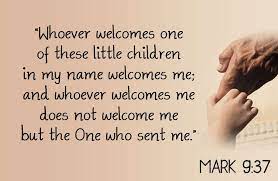
Last Place Is First

[From the version for young people]

Can you imagine being in a race and wanting to take last place?  It doesn’t make too much sense, does it! But Jesus says that the last place in his Kingdom is really the first. 

The world says that getting ahead is the thing to do. Being promoted in a company often makes people proud, for they have lots of people under them that they can tell what to do. Jesus’s disciples get caught in this type of thinking, wondering who is the most important among them in Jesus’s kingdom.  Jesus notices his friends talking quietly among themselves on the road about who is the greatest; they are trying to keep their voice down so that Jesus can’t hear.  

Listen to the strong words of Jesus about all that competition going on—all that selfish thinking that his disciples got into.  What is it about being in the last place in his Kingdom that makes it so important to Jesus?  Who does Jesus use as an example to show what he means? Will you do something this day and this week that will show that you’re catching on to Jesus’s teaching in this reading?

[From the original version]

How often the disciples are “missing the boat” that Jesus is on! For the second time, Jesus tells about his coming suffering and death. So strong is their denial, they distract themselves arguing about who is the greatest and most important among them.

Jesus confronts them with their foolishness. Values are reversed when it comes to being with Jesus; the humble are exalted, the littlest become the biggest, the greatest is the one who serves; the one that dies is the one that lives. Serving the poor, the forgotten, the cast aside—they will reveal the face of the Anointed One. Pray fervently that you understand this teaching of Jesus to the full.

Mark 9:30-37

What are “Bible Breaths”? Learn More…
Example: “Welcome child—welcome Me.” v. 37

Sundays are dedicated to the Gospels from the Revised Common Lectionary.
In year B, we read from the Gospel of Mark.

For all the Firestarters I recommend the ebook.  You will have the entire program of well over a thousand of these introductions with you on your phone or tablet. Check the menu options at the site for more information.
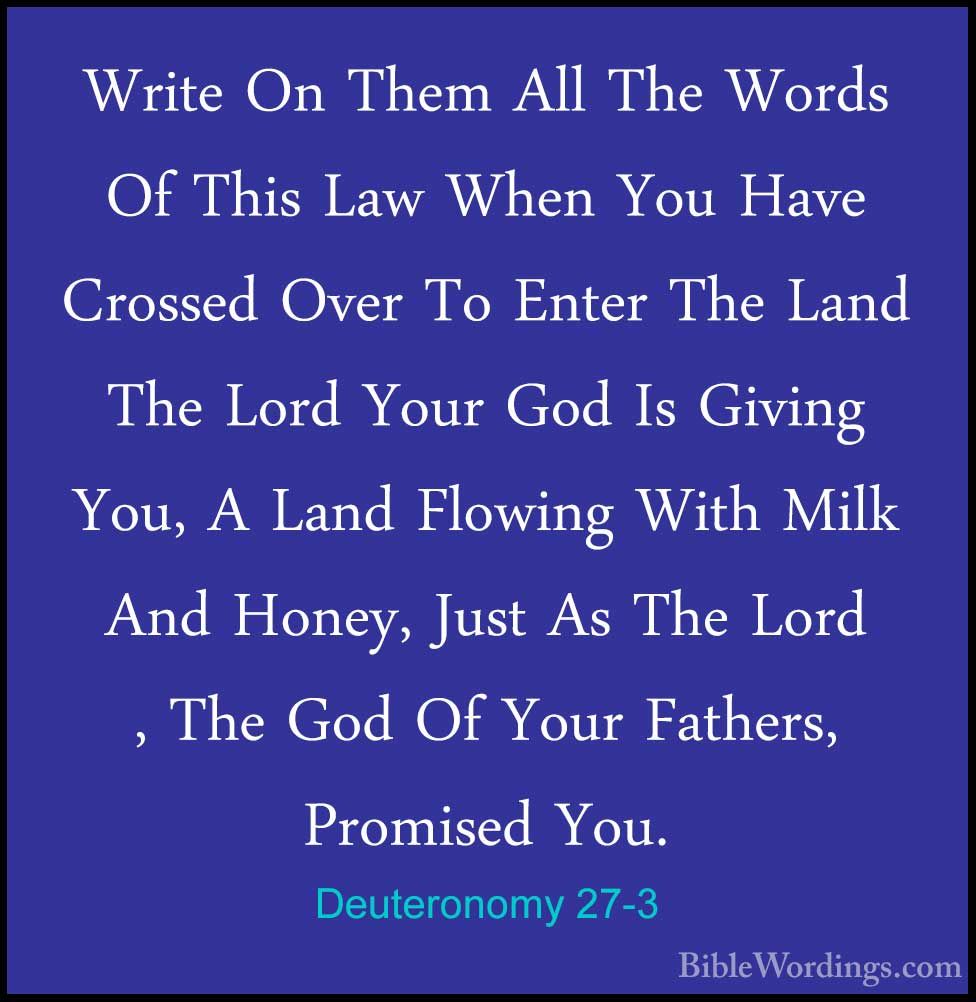
God’s Prized Possessions

Verse 18 of chapter 26 of our reading has a word in Hebrew that describes God’s people as “special” to Him: segullah. Used only eight times in the Old Testament, the underlying meaning of this word is “treasure.” God’s people are God’s prized possessions. The final reference in Malachi 3:17 refers to God’s people as his “jewels.”

In Matthew 6:10–22 Jesus urges us not to lay up treasures on earth, but in heaven. “Where you treasure is, there your heart will be also.” You are God’s treasure, held in God’s heart. The heart of Jesus opened on the cross for you, remains open right now to love you. Jesus has already laid you up as a treasure in heaven.

Paul expresses it this way in Colossians 3:1–4, where we are encouraged to “seek those things which are above, where Christ is, sitting at the right hand of God. For you died, and your life is hidden with Christ in God.”

Deuteronomy 26:12—28:6

This is the second of three parts of the Torah Portion Ki Tavo (When You Will Come)
Conservative and Reform Jewish congregations read only this part this year,
as also in this Bible plan.
Here is the entire portion in all three parts.
Deuteronomy. 26:1—29:8

Learn about Bible Breaths Learn More…
Example: Blessed as I go in and out 28:6

The Saturday passages follow the reading list that Jewish people use in their synagogue worship
throughout the world. They are taken from
“The Torah,” the first five books of the Bible from Genesis to Deuteronomy
that are read each year beginning with autumn.

For all the Firestarters I recommend the ebook.  You will have the entire program of well over a thousand of these introductions with you on your phone or tablet. Check the menu options at the site for more information

Palm Sunday in September?

[From the original version]

Autumn has always been a nostalgic time for me—smells, sounds of crunching leaves, fresh pencils and books for a new year of school. This sober, inward season is the setting when our Jewish brothers and sisters celebrate Rosh Hashana. It is a solemn beginning of a new year. Autumn is a season to meditate upon life and to discover the sacredness of time.

We have come to that place in Mark’s Gospel, which is the “autumn,” of Jesus’s earthly life. Jesus will be speaking about the End Times. It is the beginning of the end, which turns out to be a new beginning.

Today we flash back to Palm Sunday as Jesus, your King, rides into the heart of Jerusalem to take possession of God’s Kingdom. Walk beside the donkey.

[Paragraph from the version for families with children]

Jesus enters into Jerusalem in a flurry of glory—not unlike the colors that break out on the leaves before they fall and die.  Think of the branches of leaves that are placed beneath Jesus’s feet.  The crunching of leaves beneath our feet in this season can have us recall that moment of glory as Jesus enters into Jerusalem.  He will be crowned king there–not with a crown of gold, but one of thorns!  And there’ll be a different kind of throne too—the cross! 

Mark 11:1–14

Create your own Bible Breaths Learn More…
Example: Walking beside the donkey v. 9

Fridays are dedicated to the Gospels. This year, we generally read
from the Gospel of Mark, this season, chapters 10 to 16.

For all the Firestarters in the original version I recommend the ebook.  You will have the entire program of well over a thousand of these introductions with you on your phone or tablet. Check the menu options at the site for more information.