Draw Near to Jesus

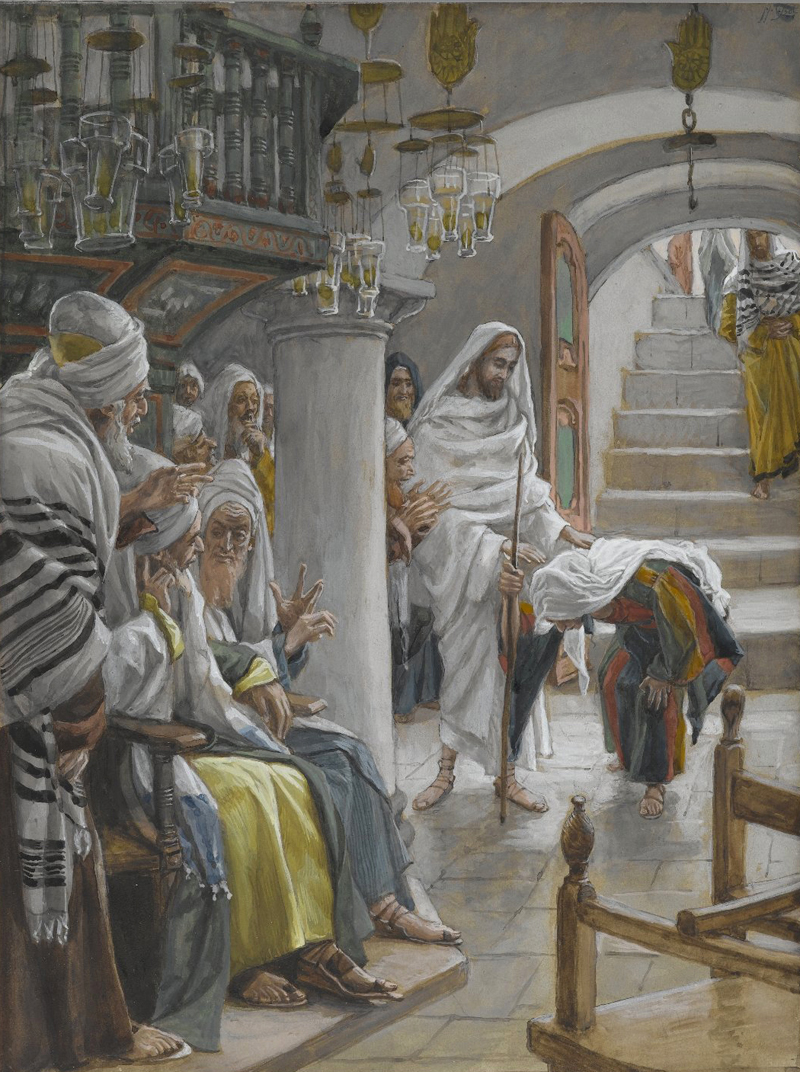
Eighteen years bent over … Ponder this long time for the woman. Her eyes focus only on the ground beneath her—rarely on the sky. She is utterly “weakened” by her condition—the root meaning of “illness” in the Greek word, astheneia.

She comes to the synagogue to hear Jesus. At least she can receive some consolation from this now famous itinerant preacher. Jesus spots her and calls her to come near, lays healing hands on her and she stands up strong and free.

Be that woman. Draw near to Jesus and he will do the rest, calling you into his intimate presence where he rests his sacred hands upon you. Picture this in your faith-filled imagination. The woman in the Gospel stands in for you!

Luke 13:10–17

What are “Bible Breaths”? Learn More…
Example: Set free from being crippled v. 12

Sundays are dedicated to the Gospels from the Revised Common Lectionary.
In year C, we generally read from the Gospel of St. Luke.


For all the Firestarters I recommend the ebook.  You will have the entire program of well over a thousand of these introductions with you on your phone or tablet. Check the menu options at the site for more information.

Holidays. . . or Not So Holy?

Persons on their deathbed are often able to put their things in order and make final arrangements before they die; so too in the case of Moses. Instructions are given about how the poor are to be treated and the ordinances for the freeing of slaves. Once again, the commandment is stated about celebrating the three major pilgrim festivalsPassover, Pentecost (“Weeks”) and Tabernacles.

We often take for granted the yearly celebration of festivals and holidays. Of course, the word “holiday” is from “holy day.” Originally, the Lord commanded such celebrations as a way to fill the year with remembrances of God’s saving activity on behalf of God’s people. We are responding to the instruction given by God through Moses. How do you celebrate holidays? Are they holy … or not so holy?

Deuteronomy 15:1—16:17

This is the third of three parts of the Torah Portion Reeh (Behold)
Conservative and Reform Jewish congregations read only this part this year,
|as also in this Bible plan. Here is the entire portion in all three parts. 
Deuteronomy 11:26—16:17

Learn about Bible Breaths Learn More…
Example: You’re blessing me here and now 15:4

The Saturday passages follow the reading list that Jewish people use in their synagogue worship
throughout the world. They are taken from
“The Torah,” the first five books of the Bible from Genesis to Deuteronomy
that are read each year beginning with autumn.

For all the Firestarters I recommend the ebook.  You will have the entire program of well over a thousand of these introductions with you on your phone or tablet. Check the menu options at the site for more information

Two Models for Prayer

The Lord invites you to welcome two persons to accompany you todayone, a widow, the other, a tax collector, also known as a publican. You will come to know them by how they contrast with other characters in two parables unique to St. Luke. Joining with the widow is a judge who likely basks in being called “Your Honor,” but who has honor neither for God nor for humans. The person forever linked to the publican is the arrogant Pharisee who spends his time, not in praying, but in boasting in self-righteousness. The widow is a model for persistent, confident prayer; the publican is an example of total abandon, humility, and trust before God. These two are your teachers today about how you need to grow in prayer.

Luke 18

Create your own Bible Breaths Learn More…
Example: Never losing heart in prayer v. 18

Fridays are dedicated to the Gospels.
In the season of Pentecost this year we read Luke 9—19:27.

For all the Firestarters I recommend the ebook.  You will have the entire program of well over a thousand of these introductions with you on your phone or tablet. Check the menu options at the site for more information.