The Everlasting Temple

We conclude the description of the tightly organized community around King David with the army’s twelve divisions, one for each month of service. We catch a glimpse into the economy of the kingdom in 27:25. Finally, as the architect of the Temple, David charges Solomon with the task of actually building it.

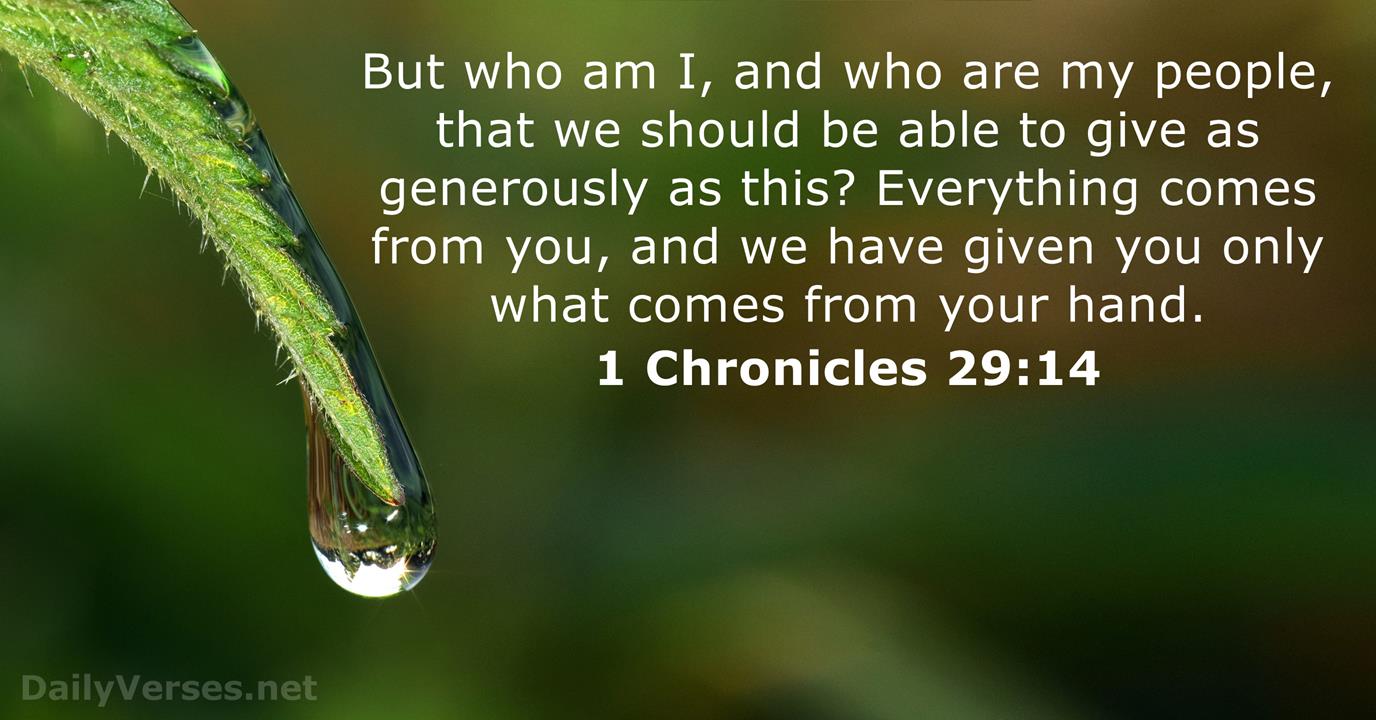
The prayer of David from 29:10 is acclaimed as one of the finest in the Old Testament. It is David’s way of saying what Jesus did from the cross: “It is finished!” The prayer flows from David’s serene and joyous heart at one with God. His task is over; the rest is in the hands of Solomon.

Jesus’s task on the cross is finished. But as the Temple yet to be built by Solomon, you are the one in whose hands is the task of continuing to build up the Body of Christ, the everlasting temple.

1 Chronicles 27—29

What are Bible Breaths? Learn More…
Example: Your purpose kept in my heart 29:18

Tuesdays are dedicated to the Old Testament books of history
and the Hebrew “Writings.”
In the season of Pentecost this year we read Proverbs 27—29 and 1 Chronicles.


For all the Firestarters I recommend the ebook.  You will have the entire program of well over a thousand of these introductions with you on your phone or tablet. Check the menu options at the site for more information

The Sands of Sinfulness

Vivid poetry describes the destruction of the capital city of one of the severest of the enemies of God’s people—Nineveh. The ultimate triumph of God over continuously unrepented evil, balances God’s compassion for the city that we encountered in the book of Jonah.

The meaning of Nahum’s name is “comfort.” Though the book’s three chapters describe anything but comfort to the people of Nineveh, still it is consolation to know that ultimate justice will prevail, that God and God’s goodness is finally going to triumph.

Nations, cities, enterprises, and even minor projects are doomed to defeat if they are built on the sands of sinfulness, pride, deceit, and exploitation, instead of upon the rock of Jesus. The reading will sober and awaken you to deeper justice and mercy in your own life.

Nahum

Mondays are dedicated to the reading of the Hebrew Prophets.
In the season of Pentecost we read Amos to Nahum with Lamentations 4—5 in the Ninth Week.

What are “Bible Breaths”? Learn More…
Example: Slow to anger; great in pow’r 1:3

For all the Firestarters I recommend the ebook.  You will have the entire program of well over a thousand of these introductions with you on your phone or tablet. Check the menu options at the site for more information.

Draw Near to Jesus

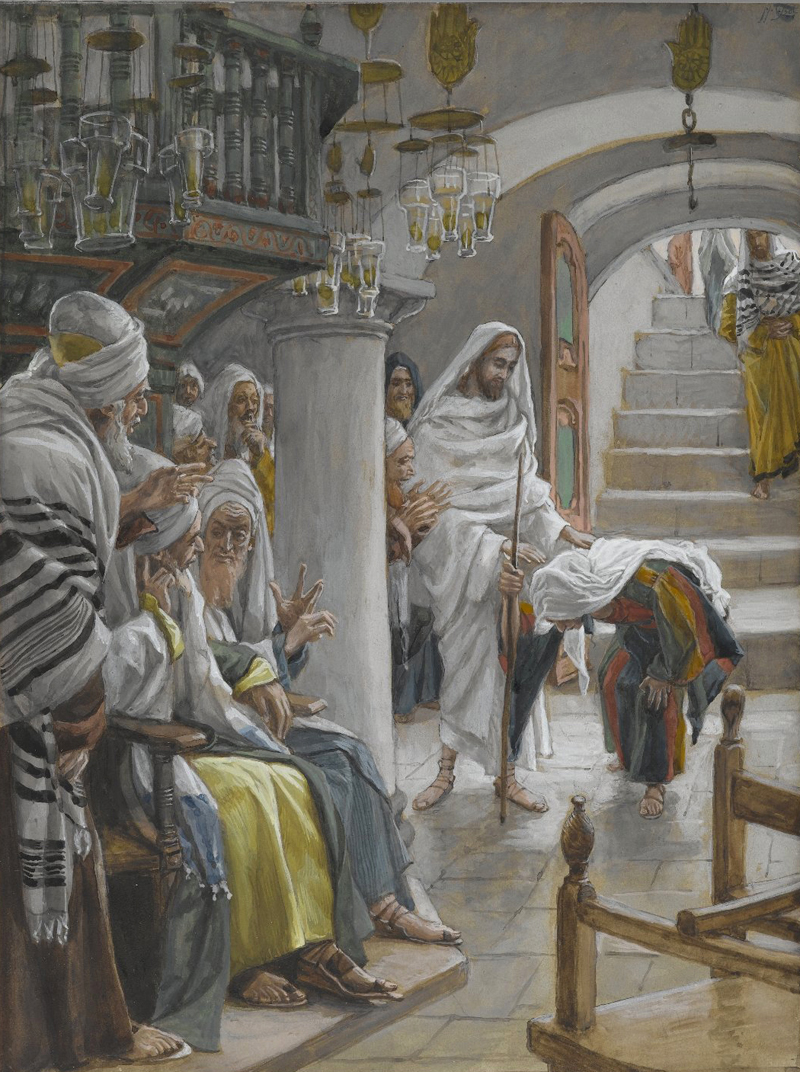
Eighteen years bent over … Ponder this long time for the woman. Her eyes focus only on the ground beneath her—rarely on the sky. She is utterly “weakened” by her condition—the root meaning of “illness” in the Greek word, astheneia.

She comes to the synagogue to hear Jesus. At least she can receive some consolation from this now famous itinerant preacher. Jesus spots her and calls her to come near, lays healing hands on her and she stands up strong and free.

Be that woman. Draw near to Jesus and he will do the rest, calling you into his intimate presence where he rests his sacred hands upon you. Picture this in your faith-filled imagination. The woman in the Gospel stands in for you!

Luke 13:10–17

What are “Bible Breaths”? Learn More…
Example: Set free from being crippled v. 12

Sundays are dedicated to the Gospels from the Revised Common Lectionary.
In year C, we generally read from the Gospel of St. Luke.


For all the Firestarters I recommend the ebook.  You will have the entire program of well over a thousand of these introductions with you on your phone or tablet. Check the menu options at the site for more information.